About this tool
With simple interest the rate always applies to the original capital, so the interest grows in a straight line: J = C × i × t and the final amount is M = C + J. Type the capital, the rate (per month or per year) and the term in days, months or years, and the calculator shows the interest, the amount and the calculation. It also works backwards: give the final amount and find the rate, the capital or the term. A table compares each period with compound interest, which is what most loans and investments really use. Days and months follow the commercial convention (30-day months, 360-day years). Everything is calculated in your browser.
How to use it
- 1 Choose what you want to find: interest and amount, rate, capital or term.
- 2 Fill in the other values and pick whether the rate is per month or per year.
- 3 Read the result, the calculation step by step and the split between capital and interest.
- 4 Check the table to see how far simple interest falls behind compound interest over time.
Frequently asked questions
What is the simple interest formula?
J = C × i × t, where C is the capital, i the rate per period (2% = 0.02) and t the number of periods. The final amount is M = C + J = C × (1 + i × t).
What is the difference between simple and compound interest?
With simple interest the rate is always applied to the original capital. With compound interest it is applied to the capital plus the interest already earned, so the balance grows faster. For one period they are the same; after that compound interest is always higher.
How do I convert the rate and the term?
The rate and the term must be in the same unit. The calculator converts them for you using the commercial convention: a month has 30 days and a year 360 days, so 2% a month for 90 days means 3 months.
Where is simple interest used in practice?
Mostly in school and competitive-exam problems, in some late-payment charges (such as 1% a month on an overdue bill) and in short-term deals. Loans, financing and investments almost always use compound interest.
Guide
Simple Interest: Formula, Worked Examples and How It Differs from Compound Interest
The formula I = P × r × t explained with worked examples – interest, final amount, rate, time and principal – and why compound interest grows faster.
Read the guide →Embed this tool
Add this free tool to your own website — copy the code below. It stays up to date automatically.
Tools for your site →More in Investments & money

Cash or Installments CalculatorNew
Find out whether a cash discount beats paying in instalments, counting what your money earns meanwhile, and see the interest hidden in the plan.
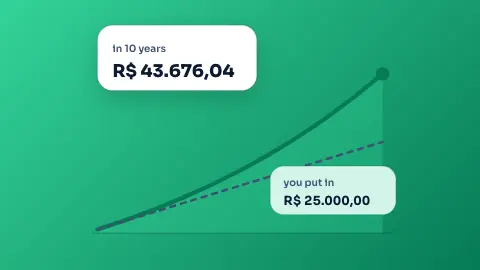
Compound Interest Calculator
See how savings grow over time with regular contributions and compound interest.
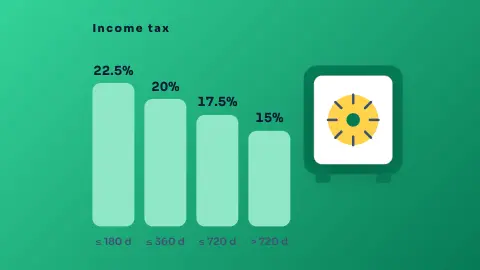
Fixed Income Calculator
Compare CDB, LCI/LCA, Tesouro Selic, fixed-rate, IPCA+ and savings side by side, net of income tax, with today's Banco Central rates.

Loan Calculator
Estimate the monthly payment, total cost and total interest on a fixed-rate loan.

Currency Converter
Convert between 150+ currencies using up-to-date reference exchange rates.

Percentage Calculator
Percent of a number, percent change, discount price, and tip splitting - five common questions in one tool.